Hamster Cage Setup: Size, Bedding Depth and Wheel Choice
A welfare-first setup guide: minimum floor space, how deep bedding should be for burrowing, safe wheel sizes and what to skip entirely.
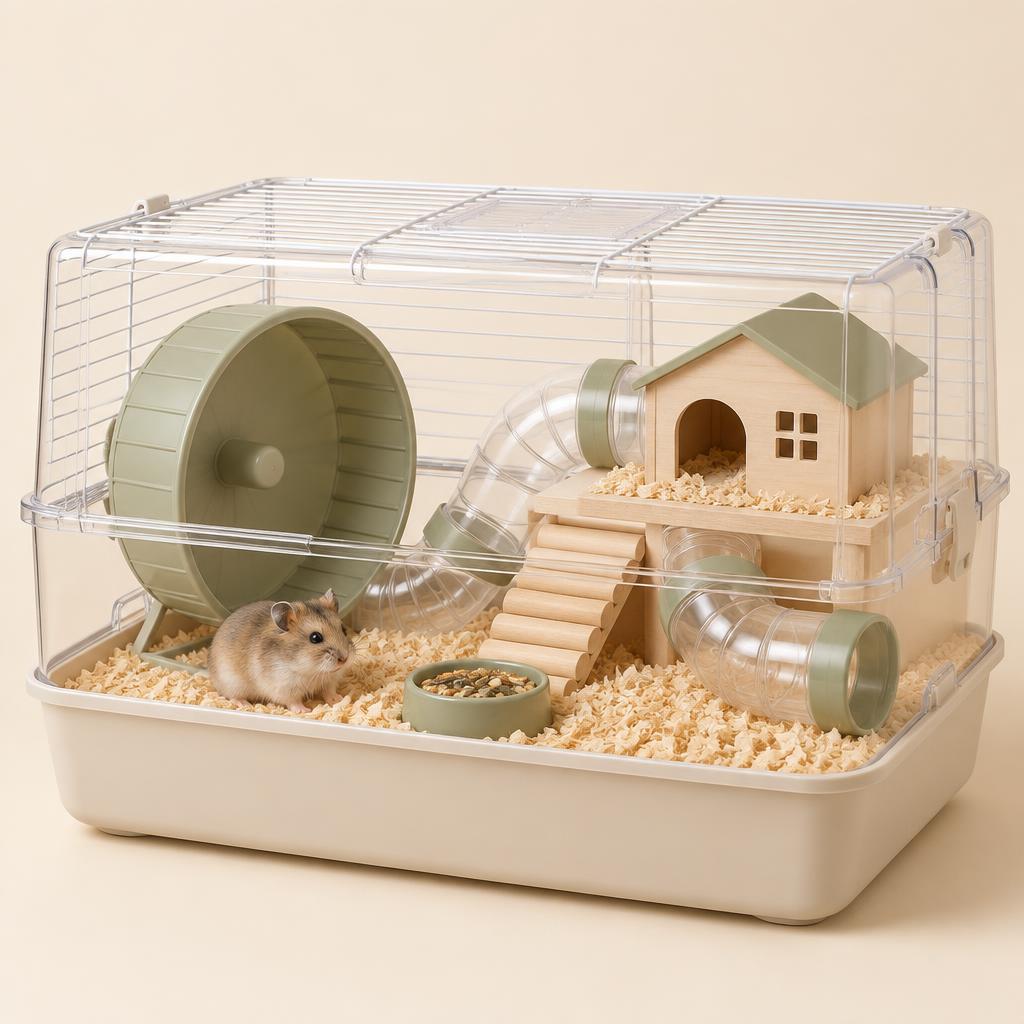
Floor space beats levels
Hamsters are ground-dwelling burrowers. Aim for at least 100 x 50 cm of unbroken floor space; a tall cage with small platforms does not substitute.
Deep bedding is not optional
Provide 25–30 cm of paper-based or aspen bedding in at least part of the enclosure so tunnels hold their shape. Deep bedding is the single biggest improvement most owners can make.
- Add a sand bath for grooming — never a water bath
- Skip pine and cedar shavings and scented bedding
- Hides with two entrances reduce stress
Wheel size and safety
A Syrian needs a 28 cm or larger wheel, dwarfs at least 20 cm, with a solid running surface and no cross-bars. A curved back on the wheel means the wheel is too small.
Setting up a hamster cage that works
Homes swing between dry winter heat and humid summers, so place a hamster cage away from vents and windows and check that bedding depth stays consistent year round. Aim for at least 6 inches of bedding for burrowing.
Deep-bedding tanks, wheels and bedding are stocked and shipped nationwide.
Happy Pets Academy ships pet supplies nationwide.
Go deeper with a full course
Our vet-led courses turn these guides into step-by-step lessons — with lifetime access and progress tracking.