Bird Pellets vs Seeds: Building a Balanced Pet Bird Diet
Why seed-only diets fall short, how pellets help, and a gradual transition plan that keeps your bird eating safely.
Seeds are not a complete diet
Many pet birds select the fattiest seeds and leave the rest, creating a diet high in calories but low in vitamin A, calcium, and other nutrients. Seeds can remain useful as training rewards and enrichment, but they should not fill the bowl all day for most species.
A formulated pellet makes each bite more nutritionally consistent. The right balance still depends on species, so discuss proportions with an avian veterinarian.
Change food gradually and monitor weight
Birds can fail to recognize pellets as food. Never remove the familiar diet and assume hunger will force a switch; small birds can become dangerously ill after a short period without enough calories.
- Weigh your bird in grams each morning during the transition
- Offer pellets early when appetite is strongest, then restore familiar food
- Crush pellets over moist greens or model eating them yourself
Add vegetables and foraging
Dark leafy greens, peppers, broccoli, squash, and other bird-safe vegetables add variety and useful texture. Introduce one food at a time and remove fresh items before they spoil.
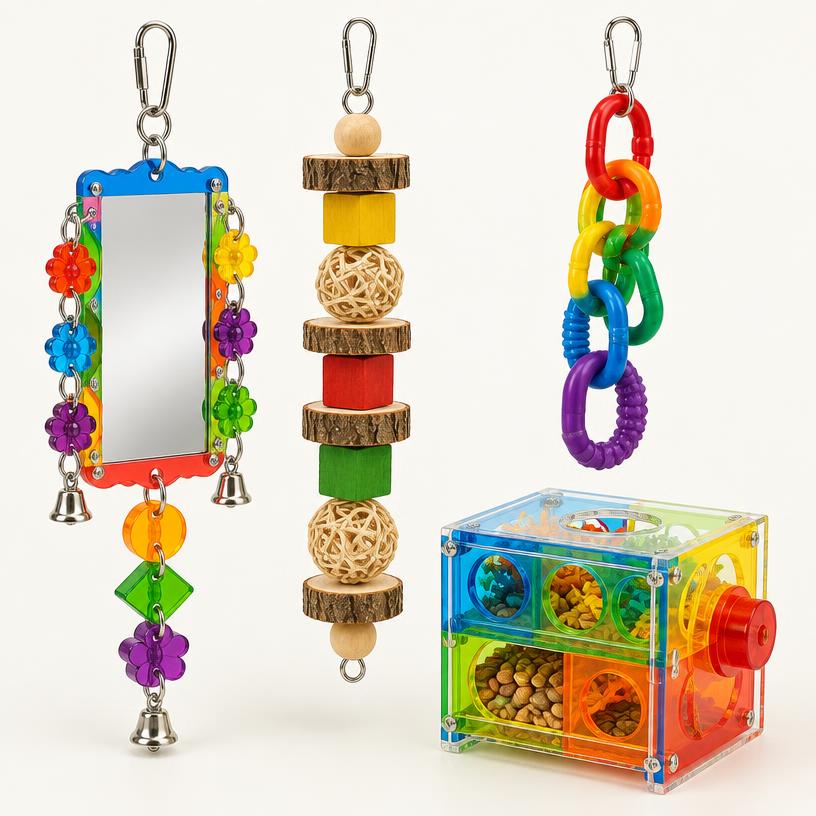
Hide measured portions in paper cups, cardboard folds, or purpose-made foraging toys. A balanced diet should support natural feeding behavior rather than turning every meal into a bowl-side task.
Watch the droppings and the scale
Diet changes can alter dropping color and moisture, but persistent diarrhea, vomiting, lethargy, or meaningful weight loss needs an avian veterinarian promptly. Daily observation catches trouble before a bird looks visibly sick.
Go deeper with a full course
Our vet-led courses turn these guides into step-by-step lessons — with lifetime access and progress tracking.