Parrot Enrichment: Foraging, Training, and Feather Plucking
Parrots forage for hours in the wild. Here's how to rebuild that work in a living room — and what to do at the first sign of plucking.
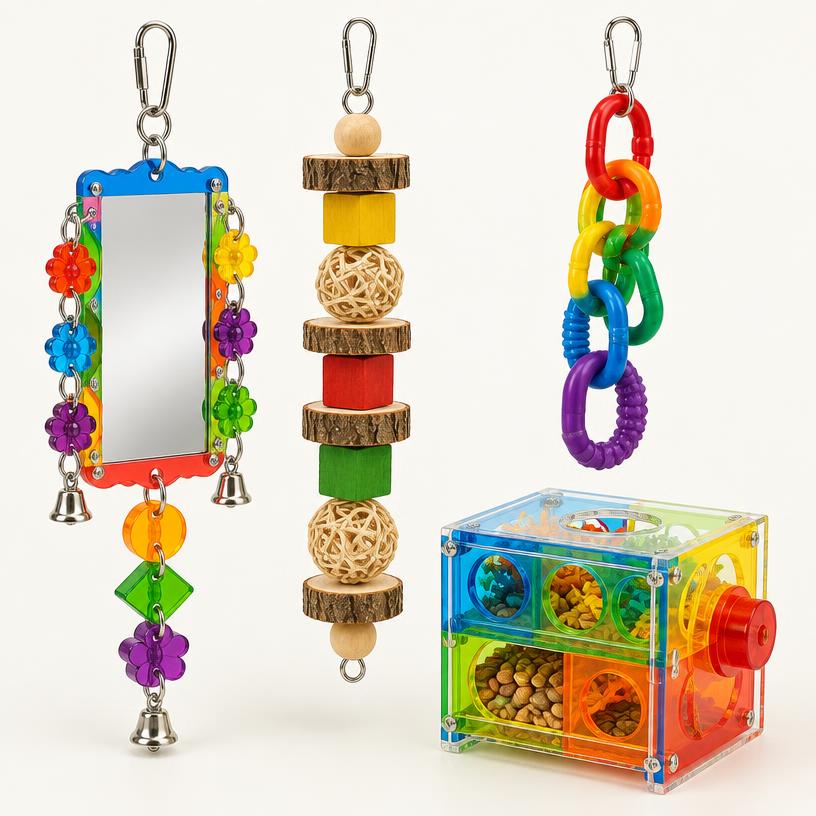
Boredom is the core welfare issue
Wild parrots spend much of the day searching for food and negotiating a flock. A bowl of seed and an empty cage removes both, and intelligent birds fill the gap with screaming, chewing, or plucking.
Make every meal a puzzle
Hide portions in paper twists, foraging boxes, and skewered vegetables. Start easy so the bird succeeds, then gradually make retrieval harder.
- Rotate toys weekly so they stay novel
- Offer destructible, bird-safe wood and paper every day
- Five minutes of trick training beats an hour of passive attention
Plucking: act early
Feather damaging behaviour can start medically — skin disease, pain, nutritional deficiency — before it becomes a habit. Book an avian vet exam at the first bare patch rather than waiting to see if enrichment alone fixes it.
Enrichment and foraging for parrots
Parrots are intelligent and social, so a predictable 10-12 hour light cycle paired with daily foraging work prevents boredom behaviors like screaming and feather plucking.
Foraging toys, shreddables and training treats are stocked at Happy Pets Academy and shipped nationwide.
Happy Pets Academy ships pet supplies nationwide.
Go deeper with a full course
Our vet-led courses turn these guides into step-by-step lessons — with lifetime access and progress tracking.